 Opening hours:
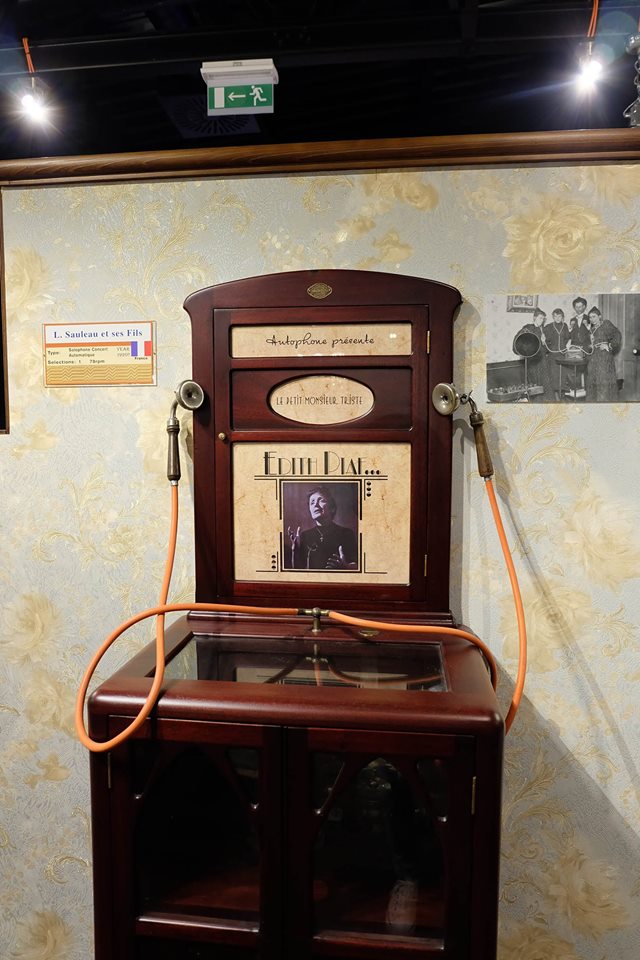
These machines were often placed in salons, hotels, train stations and amusement venues.
After inserting a coin, the phonograph automatically started playing.
Sound was delivered through two listening tubes, allowing two people to listen at the same time.
This feature increased the attractiveness of the machines for visitors and passers-by.
For the first time, people could experience recorded music without owning a device themselves.
The recordings usually included short musical pieces, opera arias or spoken performances.
Many machines were installed in so-called phonograph parlors, early listening salons.
These machines quickly became a popular public attraction.
This concept is considered an important precursor to the later jukebox.
For the first time, music was commercially offered through automated machines.
This marked the beginning of coin-operated music entertainment, which later spread worldwide.