 Opening hours:
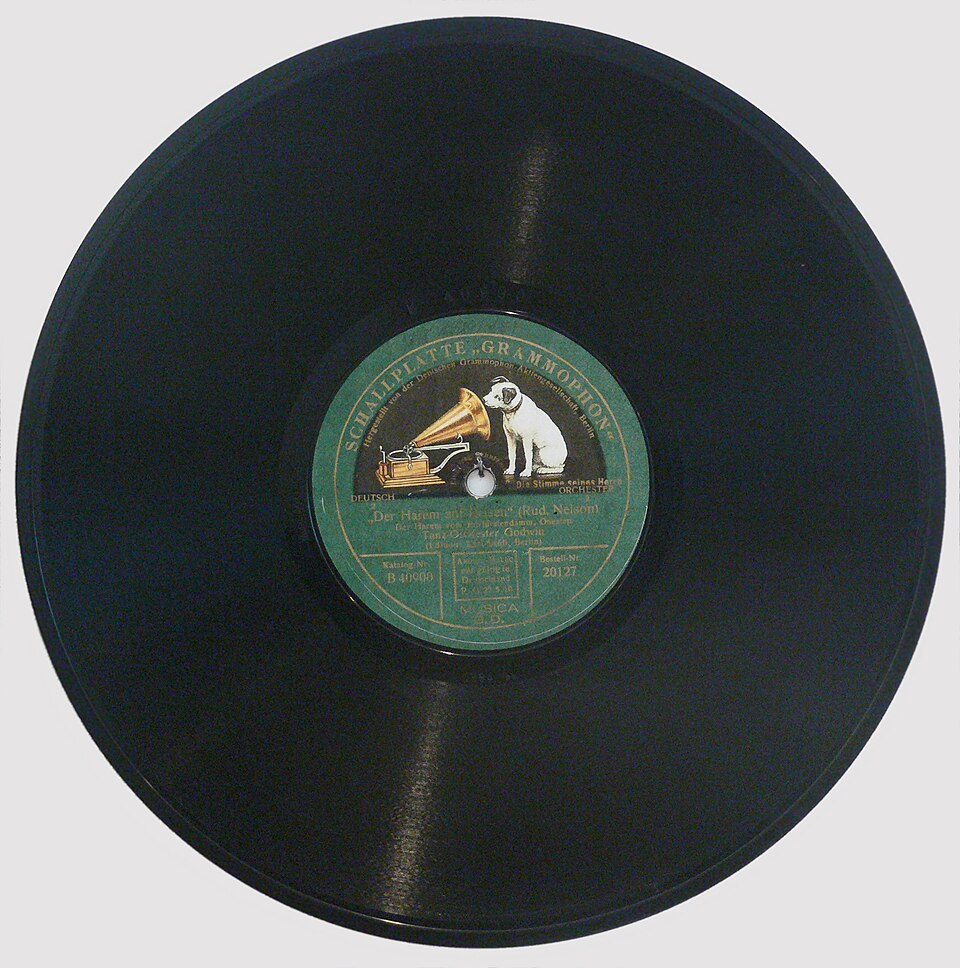
After the invention of the gramophone by Emile Berliner, flat records quickly spread around the world.
Most early records are made from shellac, a natural resin mixed with mineral fillers.
The typical speed is 78 revolutions per minute, allowing a playing time of about 3 to 5 minutes per side.
Records are produced in industrial pressing plants and sold in large quantities.
For the first time, music recordings can be distributed internationally.
Major companies such as Victor, Columbia and Odeon shape the emerging market.
Famous artists like Enrico Caruso gain worldwide recognition through records.
The gramophone becomes a popular home entertainment device.
Records soon appear in living rooms, cafés and dance halls.
The shellac disc remains the dominant audio medium for several decades.
It later leads to the development of vinyl records and modern music distribution.