 Opening hours:
Traditional relay and stepper-unit mechanisms are replaced by microprocessors and electronic circuit boards.
Game control is now handled by programmable electronics instead of mechanical logic.
This allows more complex rules and bonus features to be implemented.
Many functions and settings can now be adjusted through programming.
These machines operate more reliably and faster than electromechanical games.
Maintenance requirements are also significantly reduced, since fewer moving parts are needed.
Inside the cabinet, most of the old relay assemblies disappear.
The cabinet interior becomes much emptier, while most electronics are placed in the backbox (head).
There you now find circuit boards, processors and electronic control systems.
This development marks the full transition to modern programmable pinball machines.
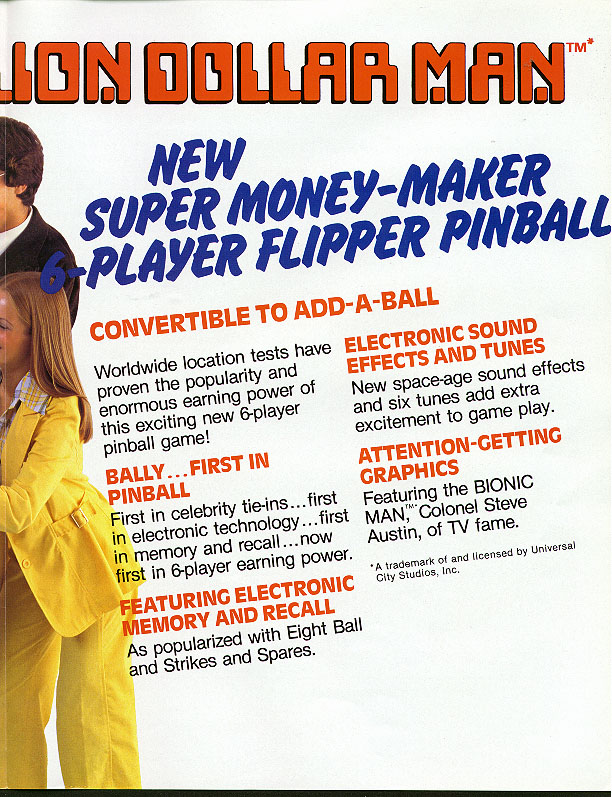
A well-known example of this generation is “Six Million Dollar Man” (Bally, 1978).