 Opening hours:
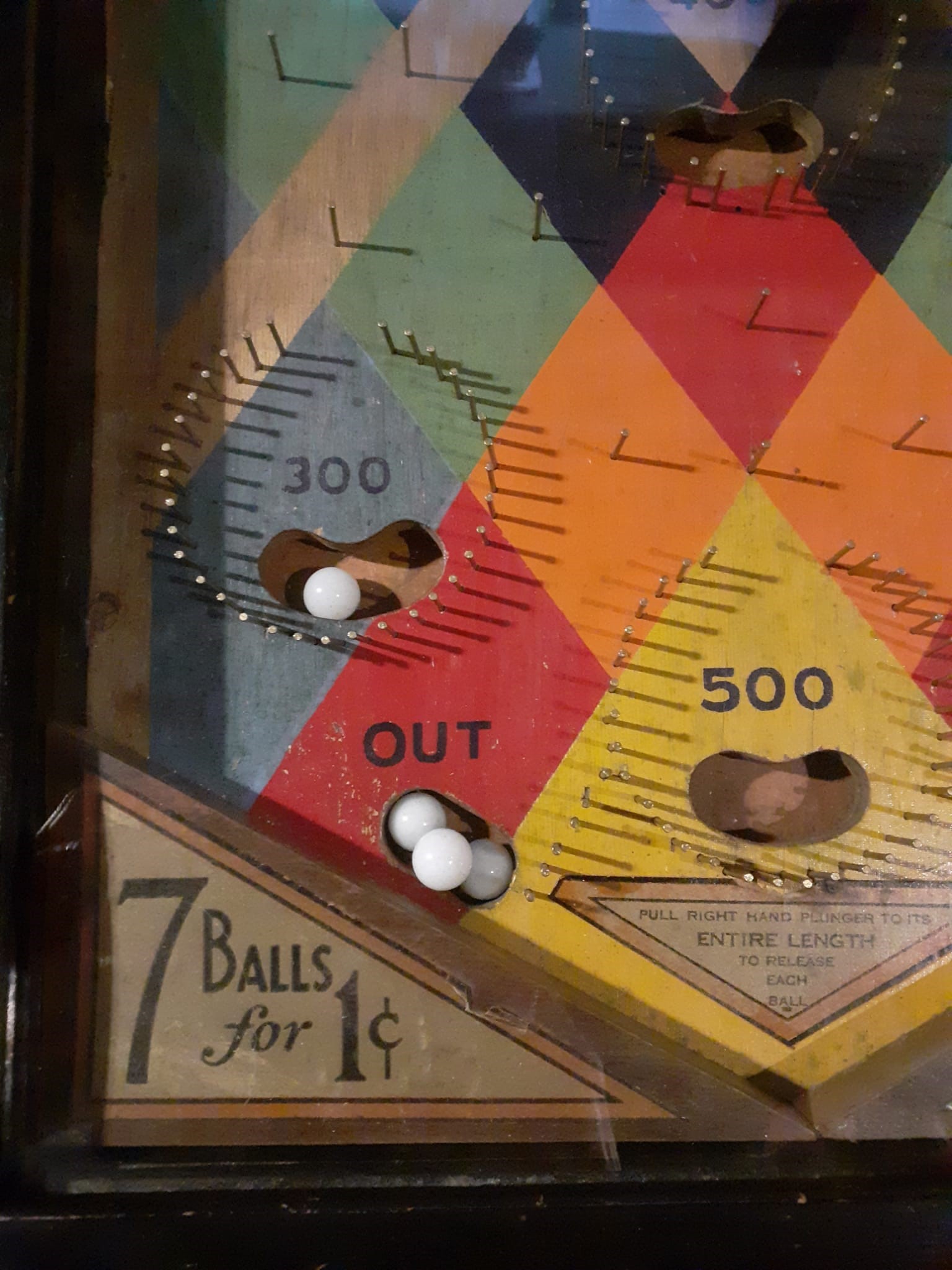
At the beginning of the 20th century, the first so-called “Bagatelle” games appeared. Machines such as Bally Hoo, Whizz Bang, and 5 Star Final are considered direct precursors of modern pinball machines and mark the beginning of their development.
These early machines were entirely mechanical and contained no electrical components.
The ball was launched into the playfield using a spring-loaded plunger mechanism.
The playfield contained numerous metal pins, obstacles, and scoring holes that influenced the ball’s path.
The goal was to achieve the highest possible score by skillfully launching the ball.
Once the ball entered the playfield, the player could no longer influence its movement.
As a result, the game relied on aim, timing, and a degree of chance.
The name “Pinball” comes from the English words “pin” and “ball.”
It refers to the metal pins on the playfield, which caused the ball to bounce and change direction.
Bagatelle games quickly became a popular form of entertainment in bars, fairs, and amusement halls.
Their success laid the foundation for the further technical development of coin-operated amusement machines.
In the following decades, manufacturers gradually introduced electric scoring, lights, and eventually flippers, leading to the birth of the modern pinball machine.