 Opening hours:
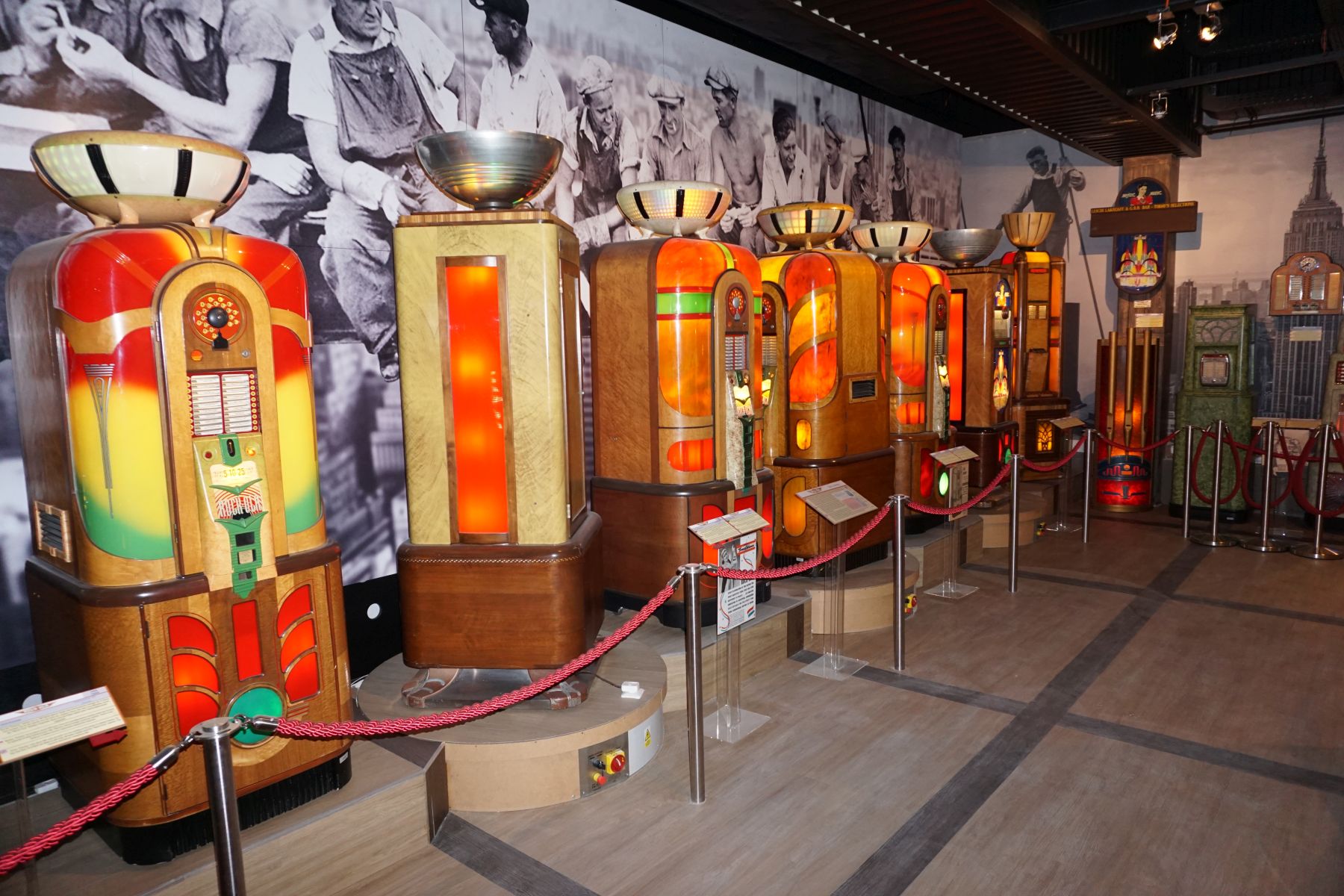
Shortly before the United States entered World War II, demand for jukeboxes declined significantly. Rock-Ola therefore experimented with new ideas for sound projection and placement.
In conventional jukeboxes the sound typically came from the lower part of the cabinet.
The Tone Columns, however, projected sound from elevated speakers, allowing the music to spread more evenly throughout the room.
A bowl-shaped reflector beneath the speaker helped distribute the sound more effectively.
Some columns were designed so that they could be placed freely in the center of a room, making them visible and effective from all directions.
Because production lasted only a short time and demand was low, Rock-Ola Tone Columns are now considered rare examples of early 1940s jukebox sound systems.