 Opening hours:
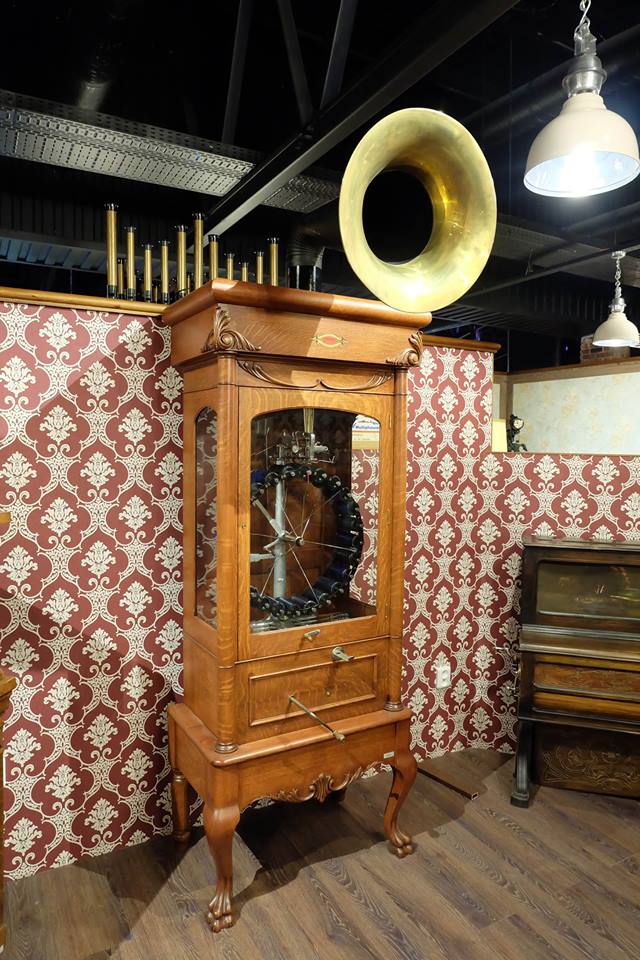
One important manufacturer of this era was Gabel, who produced complete machines featuring a mechanical multi-selection system.
These machines contained several phonograph cylinders that could be selected and played automatically.
For the first time, listeners could choose between different recordings.
Before this development, cylinders had to be manually replaced to play another recording.
With the new system, listeners could select music themselves without the need for an operator.
This greatly increased the appeal and usability of the machines.
Such devices were often installed in salons, entertainment venues, and public establishments.
They quickly became popular entertainment attractions.
The concept of automatic music selection is considered a key step toward the development of the jukebox.
These early multi-selection machines laid the foundation for later jukebox systems with record magazines and selection mechanisms.
They introduced the idea of an automatic music player with user-controlled selection.