 Opening hours:
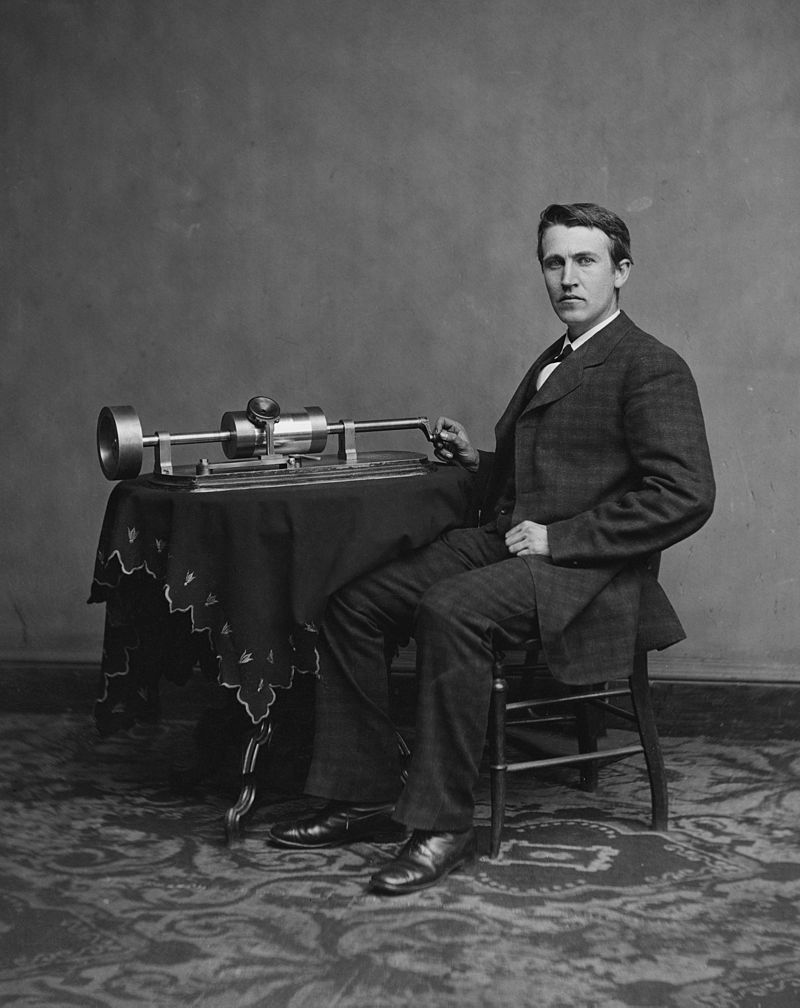
With his newly developed phonograph, Edison succeeded in mechanically storing sound.
It was the first device in history capable of both recording and playing back sound.
Sound waves were captured by a diaphragm.
A stylus attached to the diaphragm transferred the vibrations onto a rotating cylinder, first covered with tinfoil and later with wax.
The stylus engraved tiny grooves into the cylinder’s surface.
During playback, the stylus followed these grooves again.
The recorded vibrations moved the diaphragm, making the sound audible once more.
For the first time in history, voices, music and sounds could be preserved and replayed.
Edison’s phonograph marked the beginning of sound recording technology.
It laid the foundation for the gramophone, records and modern audio technology.