 Opening hours:
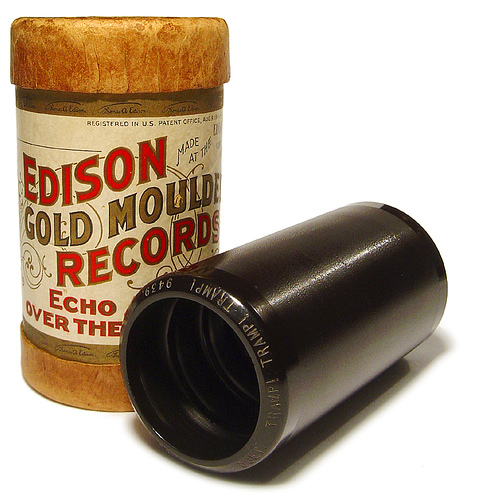
Thomas Edison improved his phonograph by replacing fragile tinfoil with cylinders made of wax.
These wax cylinders offered better sound quality and greater durability.
Sound was stored as a spiral groove cut into the surface of the cylinder.
During playback, a stylus followed these grooves and transferred the vibrations to a diaphragm.
An acoustic horn amplified the sound so it could be heard.
For the first time, music, songs and spoken recordings could be distributed more widely.
Wax cylinders were produced in recording studios and sold commercially.
This marked one of the earliest forms of the recorded music industry.
Many households soon owned a phonograph for home entertainment.
The wax cylinder remained an important sound medium for decades.
It laid the groundwork for the later development of the record and modern audio technology.