 Opening hours:
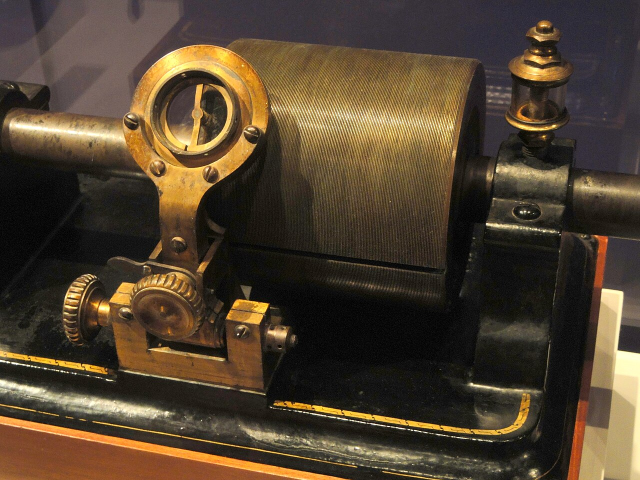
Developed by Thomas Edison, the phonograph was the first machine capable of recording and reproducing sound.
The earliest recordings were stored on tinfoil wrapped around a rotating cylinder.
A diaphragm with a stylus responded to sound waves and engraved fine grooves into the foil.
During playback, the stylus followed these grooves and transformed the recorded vibrations back into sound.
For the first time, voices, music and spoken messages could be preserved.
One of the most famous early recordings is Edison reciting “Mary Had a Little Lamb.”
However, the tinfoil surface was fragile and could only be played a few times.
Despite its limitations, the invention represented a revolutionary technological breakthrough.
Human speech could now be captured and replayed.
These early experiments soon led to improved wax cylinders and new recording techniques.
They marked the true beginning of the sound recording era, eventually leading to records and modern audio media.