 Opening hours:
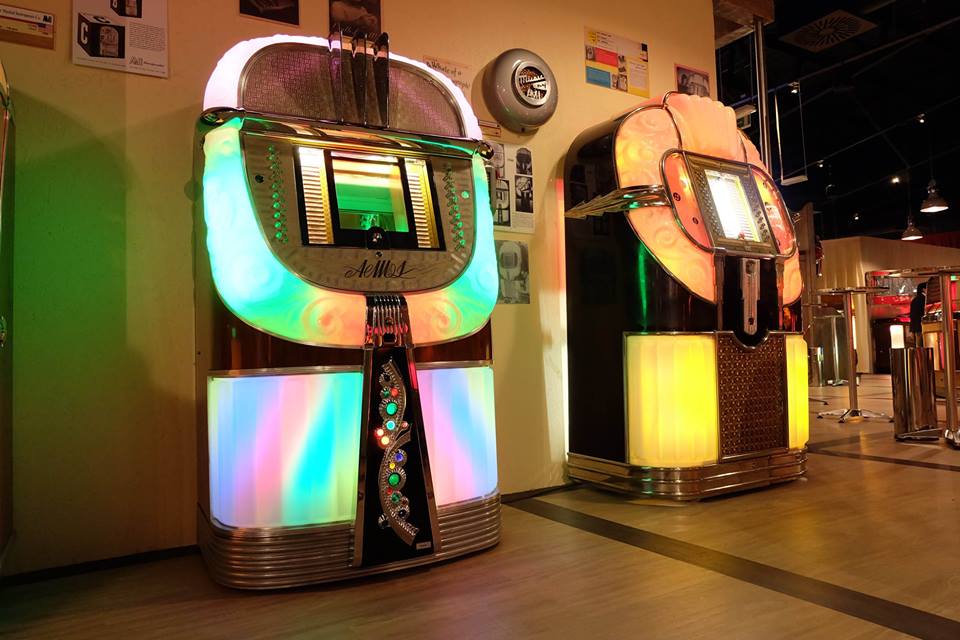
Although plastic materials had already been used before, this model made plastic a central design element on a large scale.
Large colored plastic panels illuminated from within defined the appearance of the jukebox.
These elements could glow in different colors, creating impressive lighting effects.
The combination of plastic, chrome, and lighting gave the machines a modern and futuristic look.
Jukeboxes became not only music machines but also visual attractions.
In bars, restaurants, and dance halls they quickly captured the attention of guests.
The use of large plastic components also allowed new shapes and design possibilities that were difficult to achieve with metal or wood.
Manufacturers used these possibilities to create jukeboxes that were increasingly expressive and decorative.
Models like the AMI “Mother of Plastics” symbolize this design era of the 1950s.
They demonstrate how jukeboxes evolved from simple music machines into illuminated icons of popular culture.