 Opening hours:
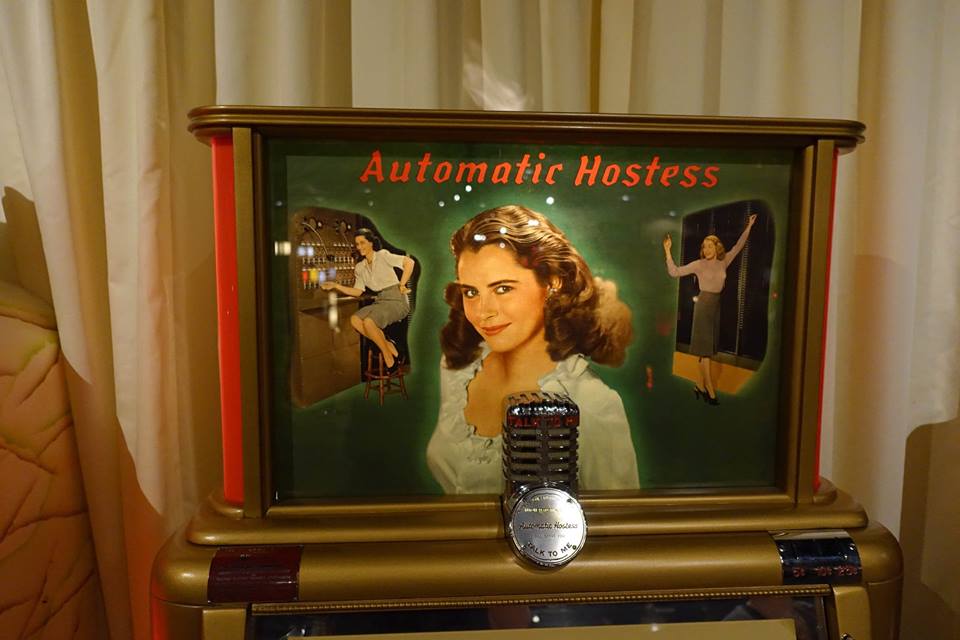
The music came from a central playback station containing a large library of records.
When a guest selected a song in a venue, the request was electronically transmitted to the central station.
There, the chosen record was played, and the audio signal was sent via telephone lines to the location.
Inside the venue, a small jukebox unit or speaker system reproduced the transmitted music.
Guests could therefore choose from a very large music catalog without each record being physically present.
This made it possible to provide hundreds of songs to multiple locations simultaneously.
The “Automatic Hostess” service was especially used in restaurants and bars during the 1940s.
It connected multiple venues to a central music library.
Today, this technology is considered an early precursor of modern music distribution systems.
Its principle already resembles today’s digital music streaming services.