 Opening hours:
Early shellac records required the steel needle of the gramophone to be replaced almost after every play.
The hard surface of shellac records quickly wore down the needle, making it blunt.
To protect the records, manufacturers deliberately used softer steel needles.
These wore out faster than the record itself and prevented damage to the grooves.
A worn needle would also significantly reduce sound quality.
Regular replacement was therefore essential for consistent audio playback.
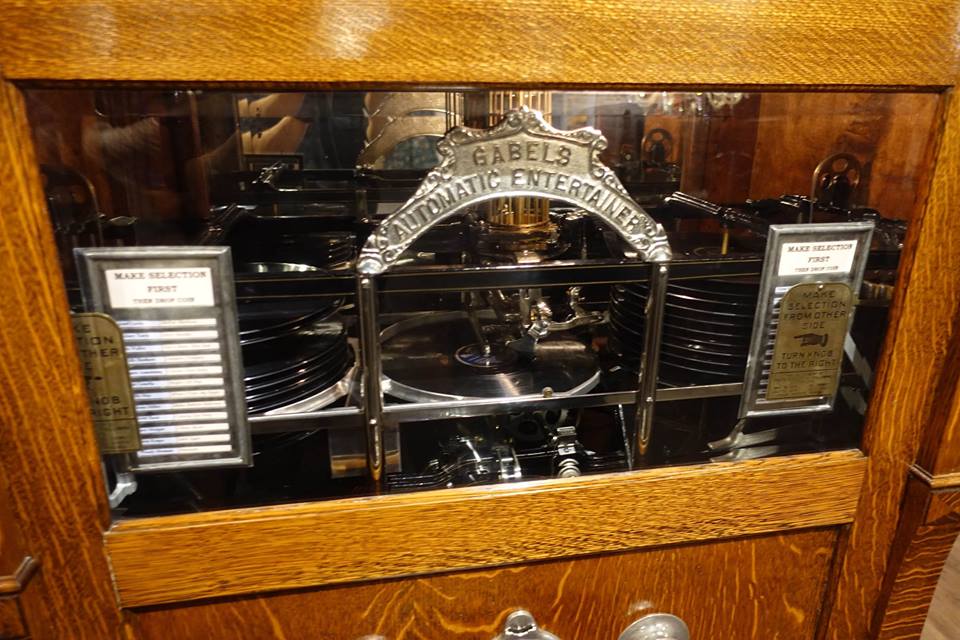
The Gabel machine solved this issue with an automatic needle changing system before a new record was played.
This eliminated the need for constant manual intervention by an operator.
This clever mechanism demonstrates the high level of engineering in early music machines.
It illustrates how much technical ingenuity was invested to create reliable and user-friendly automated music systems.